

GENEXCHANGE - RESEARCH & KNOWLEDGE SHARING
From genetic diagnosis
to lifelong care.
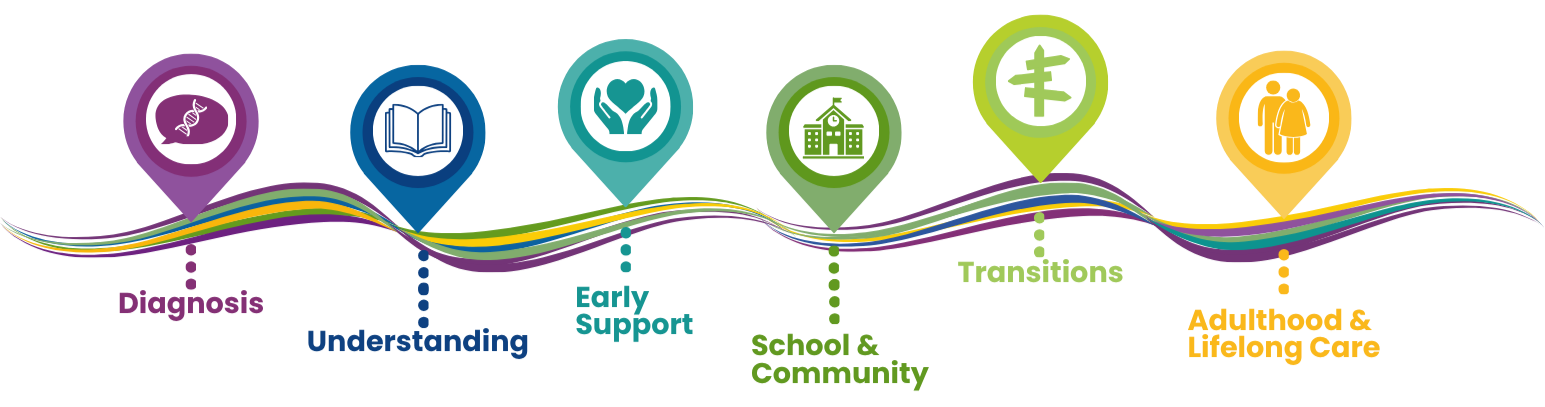
How genetic information is shared matters. Families and care teams need clear explanations, space for questions and support to understand what a diagnosis may mean for their lives.
GeneXchange brings families, healthcare professionals, researchers and communities together to improve how a genetic diagnosis is communicated and how people are supported from that conversation onward.
Connect with us →
FROM THE FIRST CONVERSATION ONWARD
Understanding.
Compassion.
A way forward.
How can sharing a diagnosis open a path to understanding and ongoing support?
THREE CONNECTED AREAS OF FOCUS
Support begins with how
the information is shared.
01
Sharing
the diagnosis
Explore how genetic findings are explained with clarity, compassion and respect, including what is known, what remains uncertain and space for people’s questions.
A genetic diagnosis can offer long-awaited answers. It can also bring unfamiliar language, uncertainty and new questions.
The words used, the way information is explained and the opportunity to return with questions all belong within the conversation about better support.
Using Fragile X syndrome as a model, GeneXchange explores how evidence and lived experience can inform communication, practical next steps and care across the lifespan with potential relevance to other rare genetic conditions.
02
Making sense
of the information
Help individuals and families revisit information at their own pace and explore what it may mean for their lives, priorities and future.
03
Connecting with
care and support
Explore useful next steps and stronger communication across healthcare, education and community services as needs change over time.
HOW WE WORKE
Evidence and experience.
Learning together.
Bring research knowledge together with family, professional and community perspectives to understand real-world challenges and identify practical solutions.
Co-design means developing ideas with the people who may use them, so that language, tools and approaches reflect their questions and priorities.
Collaborative I Evidence-informed I Family-centred I Compassionate
WHAT WE WILL EXPLORE THROUGH CO-DESIGN
Better conversations.
Clearer information. Connected next steps.
Proposed areas include tools for sharing a diagnosis as well as resources that support understanding, follow-up and navigation. These are development directions, not resources already available.
Guides for diagnosis conversations
Explore ways to explain findings, invite questions and discuss uncertainty, strengths and individual circumstances with compassion.
Follow-up & care-team communication tools
Support continuing conversations and information sharing between individuals, families, healthcare professionals and community supports.
Understandable take-home information
Explore family-friendly materials people can revisit and share, without needing to absorb everything in one appointment.
Referral pathways & navigation resources
Help connect families with relevant information, services and support at the right time.
Care maps
Help people understand and discuss care needs, the people involved and potential next steps across the lifespan.
FROM COMMON TO UNIQUE
Shared needs.
Individual lives.
Addressing what is common across rare disease care needs can create more space for what is unique to each individual and family.
Fragile X provides a starting point for learning. The aim is to explore approaches that can be adapted thoughtfully across other rare genetic conditions.
EXPECTED OUTCOMES
What we are working toward.
Clearer, compassionate communication
Genetic information shared in ways that welcome questions and respect individual and family perspectives.
Stronger professional support
Practical knowledge and tools to support healthcare and allied health professionals.
These are intended outcomes. Findings and results will be shared as the work develops.
Information people can return to
Understandable resources that support learning over time and conversations beyond the first appointment.
More connected care
Approaches that help link diagnosis, follow-up and community support throughout life.
BUILDING THE WORK
A foundation for
what comes next.
Connected work, with funding and progress described separately for each strand.
FUNDED FOUNDATION
GeneXchange knowledge synthesis
The CIHR-funded knowledge synthesis brings research evidence and lived experience together to explore needs connected with genetic diagnosis and lifelong care.
DIRECTION FOR DEVELOPMENT
GeneXchange Pathways
The broader direction presented here connects communication of a diagnosis with co-design of practical information, tools and support pathways.
PROPOSED EXPANSION - SUBJECT TO FUNDING
GeneXchange Alberta
A proposed primary-care proof-of-concept would build on this foundation to develop and test practical approaches with partners. Funding and partner arrangements would determine delivery.
PRINCIPAL INVESTIGATORS
Community and research
leadership, together.
Dr. Kara Murias, MD, PhD, FRCPC
Pediatric Neurologist
Assistant Professor, Departments of Pediatrics, Clinical Neurosciences and Psychiatry
Cumming School of Medicine, University of Calgary.
Dr. Genevieve Currie, PhD, RN
Associate Professor
School of Nursing and Midwifery
Mount Royal University
LET’S CONNECT
Help shape the conversation →
and what follows.
We welcome individuals and families, clinicians, researchers, educators, carers and organizations interested in improving how genetic information is shared and supported.
Seeking collaborators, advisors, implementation partners and supporters.